
When to Repair vs Replace Mesh PPE
Date Posted:21 August 2026

Repair your mesh when the damage is small and contained: a few broken rings, a worn strap, a spring that has lost its tension. Replacement is for the structural problems, like large worn sections, rust through the rings, or a garment that keeps failing in new spots.
The catch is that almost nothing should be written off from across the room. We repair far more mesh than people expect, including garments that arrive with a note saying they are probably scrap. Send it in, we assess it physically, and if a rebuild costs more than a replacement we tell you that instead.
Check It, Then Send It In
Under Australia's WHS Regulations, PPE has to be maintained, repaired or replaced so it keeps minimising risk to the worker using it. A glove with three missing rings does not meet that test. Inspect mesh before every use, holding it against good light and working through it systematically:
- Broken, bent or missing rings, especially any gap you can see light through
- Failed welds, where a ring has split open at its join
- Holes or thinning in the weave from punctures or years of abrasion
- Rust or discolouration, a sign the stainless steel has been compromised
- Stretched or broken straps, springs and harnesses, which usually fail before the mesh does
That check tells you a garment has to come off the floor. It does not tell you whether it can be rebuilt. Chainmail is the last barrier between a boning knife and someone's hand, so the assessment matters more than the guess.
What We Can Repair
MARS can repair virtually any type or extent of damage to chainmail PPE. Individual rings can be replaced, large sections of mesh can be reconstructed, and worn springs, straps and harnesses can usually be renewed. The bigger jobs most people assume are past saving are routine work here.
Repairing quality mesh gloves is often significantly cheaper than buying replacements. It extends the service life of PPE you have already paid for, and the same worker gets back the fit they already trust.
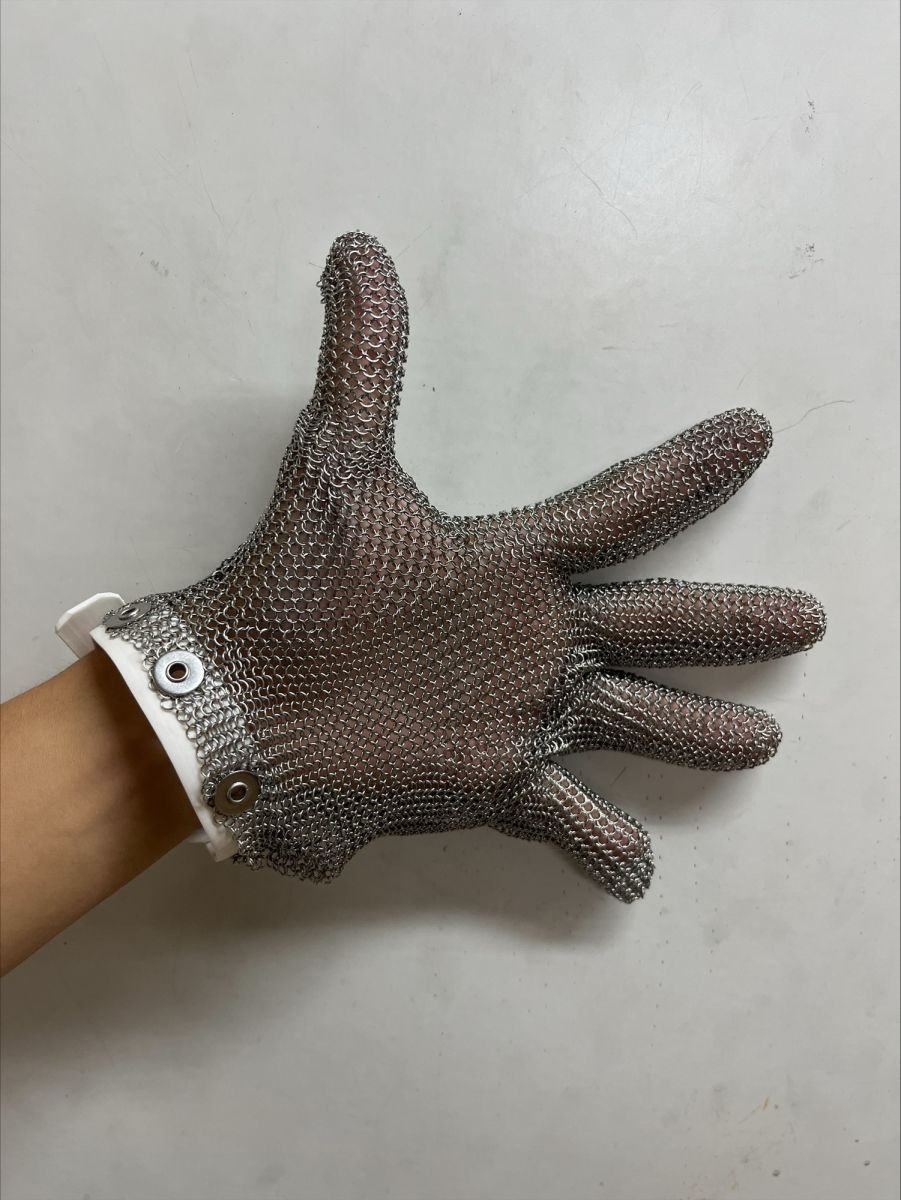
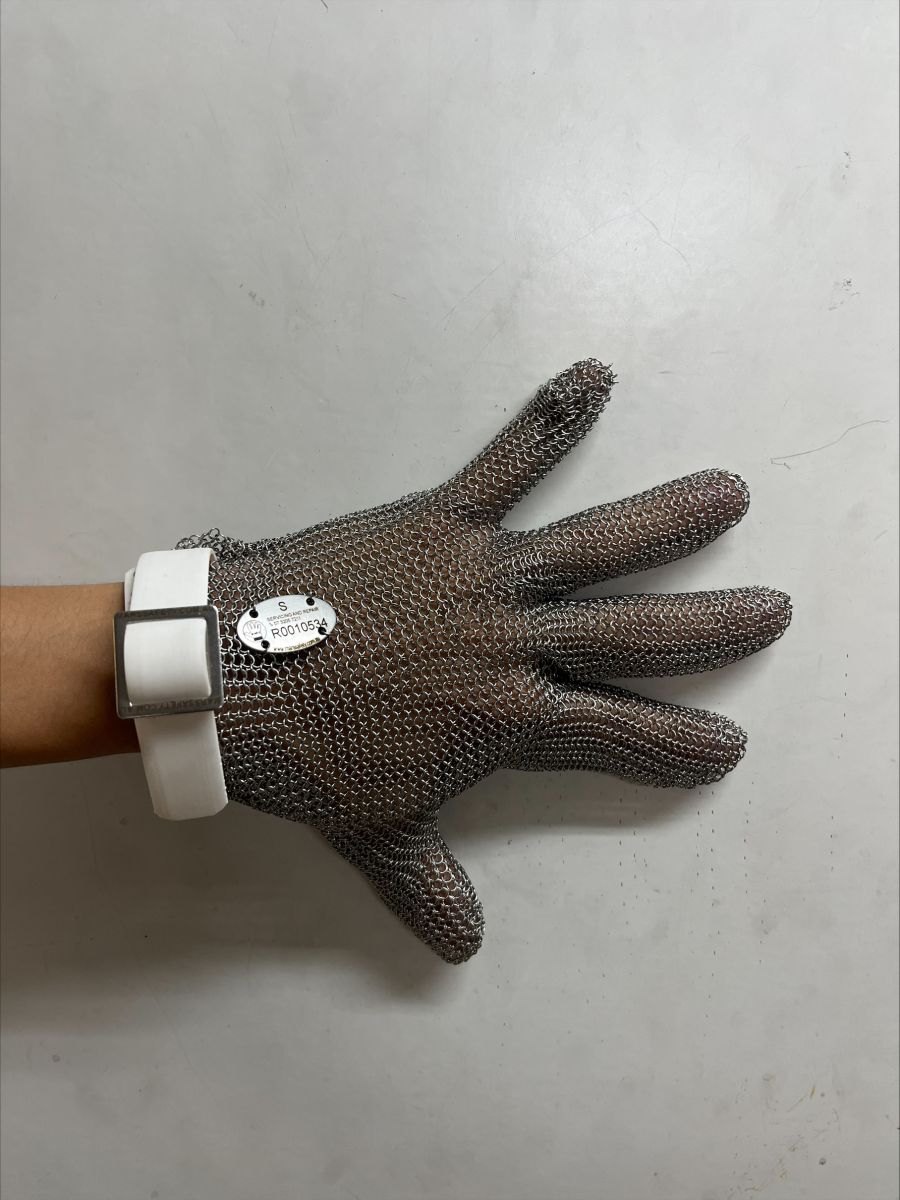
What a Proper Mesh Repair Looks Like
Closing the visible hole is the easy part. What matters is what goes back into the weave and how it is joined. That is where it pays to ask pointed questions.
Trained technicians who read the weave
Mesh is not one pattern. Different manufacturers use different designs, ring sizes and weave patterns, and a repair that ignores those differences will distort the garment even when every ring is sound. Our technicians are trained to identify the manufacturer's design and repair to it. We work on stainless steel mesh specifically.
AISI 316 rings, butt fusion welded
We only use AISI 316 stainless steel rings, closed with butt fusion welds on purpose-built weld machines. It is the same weld process used when the garment was originally manufactured. Our weld points will not corrode or bulge, and every individually welded ring leaves a smooth surface, so the repaired section sits flush with the weave.
Original fit and dexterity kept intact
A repair that stiffens a glove has failed even when the mesh is sound. Oversized rings, excessive patching and an incorrect weave pattern create rigid sections that affect grip and comfort, and a worker will quietly stop using a glove that fights their hand. Our repairs hold the garment's original fit and dexterity.
Be wary of splicing rings shut with pliers as a permanent fix. A crimped ring sits proud of the weave, snags on everything, and can open again under load. On food-grade protective equipment, a rough join is a hygiene problem as well as a safety one.
Why Repair Materials Matter
A garment well inside repairable range will still fail early if the repair stock is wrong. That is why a fair few garments arriving at our workshop are not worn out at all. They were repaired badly somewhere else. Inferior stock includes:
- Stainless steel rings of an unsuitable grade, or the wrong wire thickness or diameter
- Rings that do not match the original weave, or are poorly formed and inconsistently sized
- Rings closed mechanically rather than properly welded
- Incorrect springs, straps, buckles or fastening components
- Materials unsuitable for repeated food-processing cleaning and sanitation
The garments below arrived after being repaired elsewhere, showing incorrect rings, excessive patching and unsuitable hardware. We removed those repairs and reconstructed each area properly. Every one was repairable. None had been repaired well.
A repair can look acceptable while introducing real weaknesses. Rings that are not properly welded into the mesh can enter the food production environment, along with loose wire ends and poorly secured hardware. Incorrect ring placement distorts the weave and can open gaps around high-risk areas. And a cheap repair is no saving once you have paid for repeat work, freight and downtime.
When to Replace Your Mesh
The signs a garment is near the end of its working life:
- Large sections of the weave are worn thin, not just isolated rings
- It has been patched repeatedly and keeps failing in new spots
- Corrosion has spread through the rings rather than sitting on the surface
- The mesh is deformed and no longer sits correctly on the wearer
Treat that as indicators rather than a verdict. We have rebuilt plenty of garments that ticked two or three, because widespread wear on the outside of an apron is a very different job to corrosion through the rings of a glove. If a garment shows any of these signs, the next step is an assessment, not a bin.
Send It In: What Happens on Arrival
Our default position is repair. Every garment received by MARS is physically assessed on arrival and we will do our best to repair it, whatever the note on the box says. A photo is useful for a ballpark, but nobody can assess weld integrity, ring grade or how a fastening system sits from a picture on a phone.
The assessment covers the mesh, the existing rings and welds, and the full fastening system, and you get a quote before any work begins. If rebuilding would approach or exceed the cost of a replacement, we classify the item Beyond Economic Repair and quote new mesh instead, with no obligation either way.
Repairing whatever we can has one hard limit. If a garment cannot be brought back to the safety standards it was built to meet, we will not send it back into service and we will say so. Safety is always first.
Request a quote through our Mesh Repairs page with the garment type, size and a note on the damage, then post the item to our workshop. Repaired gloves and aprons come back clean, refurbished and covered by the MARS Quality Guarantee.
In Summary
Repair the small stuff, replace the structural stuff, and let a physical assessment make the call on everything in between. Broken rings, worn straps and tired springs are routine repairs. Widespread wear, corrosion through the rings and a garment that keeps failing in new spots point towards replacement. If you’re not sure which side of the line your gear sits on, send it in and let the bench decide.
There’s one more reason to trust us with that call. MARS is now an authorised repair centre for both Chainex and Niroflex, a recognition few workshops hold. That authorisation is brand-specific, but our repair work isn’t. We repair all mesh brands, and every garment gets the same treatment: AISI 316 stainless steel rings, butt fusion welds, and a weave pattern matched to the original manufacture.
Frequently Asked Questions
Should I send in mesh PPE I think is beyond repair?
Yes, send it. We repair a lot of garments that arrive with a note saying they are probably scrap. Individual rings, large sections of weave, springs, straps and harnesses can all be rebuilt, and damage that looks terminal from across the room is often localised once it is on the bench. If a rebuild would cost more than a replacement we tell you and quote new mesh instead, so there is nothing lost in having it looked at.
What happens when my garment arrives at MARS?
It is physically assessed rather than judged from a photo. We check the mesh, the condition of the existing rings and welds, and the full fastening system, then quote you before any work starts. Where a garment can be brought back to the safety standards it was built to meet, we rebuild it using AISI 316 stainless steel rings and butt fusion welding.
Are all mesh PPE repairs the same?
No, and the difference usually shows up months later rather than on delivery. The grade and wire diameter of the rings, whether they are welded or mechanically crimped, and whether the weave pattern matches the original all decide how long a repair holds and how the garment sits on the wearer.
What should I ask a mesh repairer before sending garments in?
Four questions. What grade of stainless steel are the replacement rings? Are they welded closed or mechanically crimped? Do you match the original manufacturer's weave pattern? And do you assess and quote each garment before starting work? At MARS the answers are AISI 316, butt fusion welded on purpose-built machines, yes, and yes.
Can chainmail mesh PPE be repaired?
Yes, and more extensively than most people assume. We repair cut-resistant gloves, sleeves, aprons, tunics and full suits across all brands and weave types, replacing damaged rings with AISI 316 stainless steel and welding them closed to match the original manufacture.
When should chainmail mesh gloves and aprons be replaced?
Replacement makes sense when large sections of the weave are worn, corrosion has spread through the rings, the garment is deformed, or repairs keep failing. In practice we make that call after assessing the garment, not before.
Do not bin it before we have seen it. Request a quote through our Mesh Repairs page, or call the MARS repair team on 07 3205 7211 with the garment type and a note on the damage.