
Types of butcher knives and what each one is for
Date Posted:22 October 2026
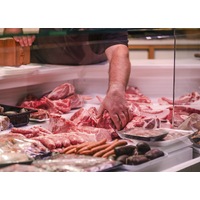

There are five common types of butcher knives. Boning, breaking, cimeter, bullnose and skinning, each with a shape and blade profile suited to a particular job. The breaking knife takes a side or a primal down into sub-primals. The cimeter turns those sub-primals into steaks and chops. The boning knife works around bone and joint to take the meat off cleanly. The slicing knife portions boneless meat into even pieces. The skinning knife lifts hide and fat without scoring the muscle underneath.
You do not need all five on day one. Most butchers do the bulk of a shift with a boning knife and one long blade, and buy the rest as the work demands it. Pick the blade for the cut in front of you, though. A knife working outside its job is slower, wastes meat and puts your hand where it should not be
The five types of butcher knives, and what each one does
Boning knife
Short, narrow and finely pointed, usually 5 to 7 inches (13 to 18 cm). It follows the line of the bone so you leave as little meat behind as possible. Boning knives come stiff, semi-flexible or flexible, and straight or curved. As a general rule, stiffer blades suit heavier red meat boning and trimming, while more flexible blades suit work where the knife has to follow smaller bones and tighter contours, such as poultry and fish. Plenty of butchers run a flexible blade on red meat too, so it comes down to the user and the job. Curved boning knives are popular for repetitive boning and trimming because the blade follows the natural contours of bones and joints.
Breaking knife
Long and curved, 8 to 10 inches (20 to 25 cm), with a stiff blade and a strong tip. It separates large sections of meat and works through connective tissue and seams, taking a side or a primal down into smaller sections. The curve gives you a long sweep without changing your grip.
Cimeter (steak) knife
Also spelt scimitar, and said the same way. A long, wide, upswept blade, typically 10 to 12 inches (25 to 30 cm). Cimeters and breaking knives overlap. The cimeter is the better fit for long, clean cuts and for portioning large pieces, particularly steaks and retail cuts. The blade gives you stability through the cut, and a fluted edge reduces meat clinging to the blade. Have a look at our 10” Atlantic Cut Fluted Cimeter Knife and our range of FDick Knives which have contains several professional and reliable fluted knives.
Bullnose knife
Straight, long and rigid, with a bullnose or wide tip. For portioning boneless meat and trimming primals. The straight edge suits long push cuts through big boneless pieces, and the blunt tip is safer near the board. It is the blade we group under butcher knives on our site, although in the trade the term covers more than one knife. Our butcher slicing knives run from 10 to 12 inches.
Skinning knife
A short, wide blade with a pronounced upward curve. Skinning knives separate hide or skin from the carcass without scoring the muscle underneath. The curved belly lets you sweep under the skin in one motion. Taking off fat is trimming, which is boning knife work.
Other specialised butcher knives
Two more turn up on processing floors far more often than behind a shop counter. The sticking knife is a straight, pointed blade used on the processing line. The cleaver chops and separates meat and works through joints and smaller bones by weight. Both are specialist tools and are chosen by a plant to suit its processing method and its own workplace requirements, so they rarely come down to personal preference.
Boning knife vs slicing knife: what's the difference?
A boning knife is short, narrow and often flexible, made for working around bone and joint. A slicing knife is long, straight and rigid, made for portioning boneless meat into even pieces. Use the boning knife to take the meat off the bone, then the slicing knife to cut it to size.
Slice a rump with a boning knife and you get ragged, uneven portions, because the blade is too short to travel through in one stroke. Bone out a shoulder with a slicing knife and you leave meat on the bone, with a long rigid blade in a space it cannot turn in. Using the correct knife designed for the job gives you better control, cleaner cuts and less waste.
What is a breaking knife, and how is it different from a cimeter?
A breaking knife is a long, curved, stiff-bladed butcher knife, usually 8 to 10 inches, used to separate large sections of meat and work through connective tissue and seams. A cimeter is longer and wider, usually 10 to 12 inches, with a more pronounced upswept tip, and is used for long, clean cuts and portioning large pieces into steaks and retail cuts.
The difference between these two options is in the shape. The breaking knife is narrower, with a stronger tip for getting into seams. The cimeter is wider and flatter through the belly, which gives you a longer, more stable cutting edge.
Which knife for which cut
There is no single knife that is perfect for every task. The right combination depends on the work you're doing. As a general guide:
- Breaking knife for breaking down large cuts and primals into smaller sections.
- Cimeter for long cuts and portioning steaks and retail cuts.
- Stiff boning knife for boning and trimming heavier red meat.
- Flexible boning knife for detailed boning that follows smaller bones and tighter contours.
- Curved boning knife for trimming, boning and following the contours of bones and joints.
- Slicing knife for portioning boneless roasts, rumps and other larger boneless cuts.
- Skinning knife for separating hide or skin from the carcass
- Cleaver for chopping and separating meat and working through joints and smaller bones.
Blade flex, length and handle: three things to check before you buy
Flex. Stiff for heavier red meat and connective tissue. Flexible where the blade has to follow smaller bones and tighter contours. Semi-flexible if you want one boning knife to cover both.
Length. A longer blade means a longer stroke, fewer passes and cleaner faces, right up until it starts fighting you on the board. A 5 to 6 inch boning knife is a common choice, with length and flexibility coming down to the job and the user. A 10 inch is the standard for breaking knives and cimeters. Go to 12 inches only if you cut steaks all day.
Handle. In a wet, cold room the handle matters as much as the steel. Textured polypropylene handles, the standard across the Victorinox, F Dick, Swibo and Atlantic Cut ranges we stock, stay grippy when wet and go through sanitiser without complaint. Colour-coded handles keep species apart on a shared bench. Filter the full range of butcher knives by length, colour and brand.
Keep the edge, or the knife type won't matter
A blunt blade needs more force, and more force means less control. During a long session, give the blade a few passes on a sharpening steel as often as needed to maintain the edge. A steel maintains the edge between sharpenings. It does not sharpen the blade. When steeling stops bringing the edge back, it is time for the stone.
If you are kitting out a new starter, our apprentice kits and butcher packs bundle the boning knife, long blade and steel, so they're not guessing at what to buy first.
FAQs
Do I need both a breaking knife and a cimeter?
Not necessarily. It largely depends on the type of work you do. A breaking knife separates primals into smaller sections. A cimeter portions those pieces into steaks and retail cuts. A shop cutting from boxed sub-primals can get by with a cimeter alone. A processor or a butcher breaking whole bodies will want the breaking knife, and will usually want the cimeter as well.
Is a butcher knife the same as a slicing knife?
Often, but not always. The long, straight, rigid slicing knife with a bullnose or wide tip is what most people picture when they say "butcher knife", and it is how we group them on our site. In the trade, though, the term covers more than one blade. Breaking knives, cimeters and boning knives are all butcher knives, which is where the confusion comes from.
What size boning knife should a butcher use?
There is no single correct size. A 6 inch (15 cm) curved boning knife is a popular choice for general boning and trimming. Shorter blades give you more control for detailed work, and longer blades give you extra reach on larger cuts. Blade flexibility is just as important as blade length, so consider both when choosing a boning knife.
Can I use a chef's knife instead of a butcher knife?
For occasional home use, a good chef's knife will break down a chicken or portion a boneless roast. For regular meat processing, a boning knife and a longer cutting knife will serve you better than an all-purpose kitchen knife.
Do you sell butcher knives in bulk?
Yes, bulk pricing is available across most of our knife range, and it shows on the product page. If you're ordering for a whole team or a processing floor, call us on 07 3205 7211.
Not sure which blade suits the work?
Call the team on 07 3205 7211 and tell us what you're cutting and we can give you some advice based on industry use.